What Is Online Education?
Online education is a flexible way of learning using the internet instead of physically attending the classes on campus. In online education, students can attend classes, access study materials, submit assignments, and interact with teachers sitting at home or from anywhere in the world.
Online education is mainly offered in three formats:
1. Synchronous Online Learning
These are live online classes where students and teachers join at the same time. Students can ask questions, take part in discussions, and interact with the teacher during the class.
For example, you may join a live class at 7 PM and ask your teacher questions during the session.
2. Asynchronous Online Learning
Here, students learn at their own pace using recorded classes, study materials, and assignments. They do not need to attend class at a fixed time but must complete their work within the given deadlines.
For example, you can watch a recorded lecture at 10 AM instead of attending a live class at a fixed time.
3. Blended Learning
Blended learning combines online and classroom learning. Students may complete lectures and other coursework online while attending campus for activities such as labs, exams, or workshops.
For example, you may attend theory classes online and visit the campus for practical sessions.
Pros and Cons of Online Education at a Glance
Online education has many benefits, especially because you can study from anywhere and choose a schedule that works for you. However, there are also a few things to keep in mind before choosing online learning.
Pros of Online Education | Cons of Online Education |
Flexible study time | You need to manage your time well |
Study from anywhere | Less face-to-face interaction |
Saves travel time | You need a good internet connection and device |
Can cost less | Too much screen time |
Study at your own pace | More distractions at home |
More courses to choose from | Less social interaction |
Easy access to recorded classes | Less practical learning for some courses |
Note: Online education gives you more flexibility, but your effort matters too. Staying focused, following a study routine, managing your time, and keeping up with classes and assignments can help you get the most from online learning.
Advantages of Online Education
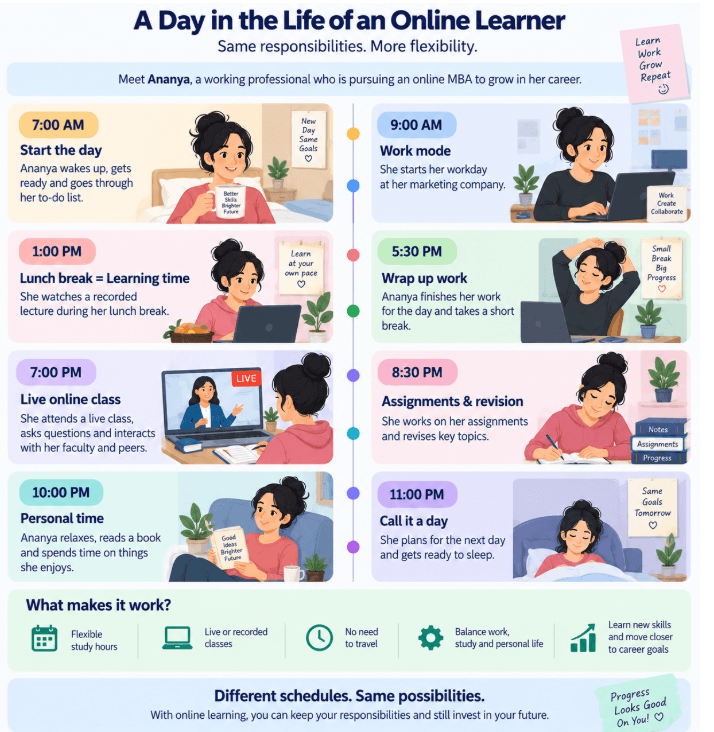
Online education gives students more freedom in how and when they study. You can learn from home, choose a schedule that works for you, and continue your studies while managing work or other responsibilities.
1. Flexible Learning Schedule
One of the biggest benefits of online learning is flexibility. You can plan your studies around your daily routine.
With online learning, you can:
- Study while working
- Manage your studies along with family responsibilities
- Choose a course that fits your schedule
- Watch a class again when you need to
This makes it easier to continue your education without changing your entire routine.
2. Learn From Anywhere
You do not have to travel to college every day when you study online. You can attend your classes from home or any other suitable place.
You can also choose a program from a university in another city or state. You do not have to move to that city to study.
This gives you more freedom to choose a university and course.
3. Saves Travel and Other Costs
Online education can help you save money on some regular study expenses.
For example, you can save on:
- Daily travel
- Hostel or rented accommodation
- Moving to another city
- Other campus-related expenses
This can help reduce your overall study costs. The total fee still depends on the university and the program you choose.
4. Learn at Your Own Pace
Not everyone learns at the same speed. Some topics may be easy to understand, while others may take more time.
Online learning gives you the chance to go back to your lessons when you need to.
You can:
- Watch a lesson again
- Spend more time on difficult topics
- Revise lessons before exams
- Move ahead when you understand a topic
This can make learning more comfortable and easier to manage.
For example: if you find a particular topic difficult, you can watch the recorded class again before moving on to the next lesson. |
5. More Courses to Choose From
Online education gives you more choices when looking for a course. You are not limited to the colleges available in your area.
You can explore programs offered by universities in different cities and states.
You may also find courses that are not available at colleges near you. This makes it easier to find a program that matches your interests and career goals.
6. Useful for Working Professionals
Online education can be a good choice if you want to study while continuing your job.
You can choose an online program to:
- Earn another degree
- Learn new skills
- Move into a new career
- Grow in your current career
You can continue working while studying. This can make it easier to manage both work and education.
7. Helps You Build Digital Skills
Online learning means using digital tools regularly. You get familiar with these tools as you attend classes and complete your coursework.
You can learn to:
- Use online learning platforms
- Take part in online classes
- Work with others using online tools
- Create presentations and assignments
- Find information online
Disadvantages of Online Education
Online education offers a lot of flexibility, but it may not work in the same way for everyone. Some students may need more structured learning or regular interaction. Knowing the points below can help you choose the right learning format for your needs.
1. Requires Self-Discipline and Time Management
Online learning gives you more freedom, but you also need to take responsibility for your studies. You have to manage your study time, attend classes, and complete your assignments on time.
You may need to:
- Keep track of your classes and deadlines
- Set time aside for studying
- Complete assignments on time
- Stay regular with your studies
A simple study routine can make online learning easier to manage.
2. Less Face-to-Face Interaction
Online classes may not offer as much face-to-face interaction as a regular classroom. Most communication happens through live classes, messages, emails, or discussion forums.
However, most of the online classes are designed with some level of interaction. Live classes, group activities, and regular discussions generally help students stay connected with teachers and classmates.
3. Needs a Good Internet Connection and Device
You need a reliable internet connection and a suitable device for online learning. Most programs require a laptop, tablet, or smartphone to attend classes and access study materials.
Internet problems, power cuts, or technical issues can sometimes make it difficult to attend a class or complete your work on time.
4. More Screen Time
Online learning means spending more time using a computer, tablet, or smartphone. Classes, reading, assignments, and other study work may all involve a screen.
Spending long hours on a screen can make you feel tired and may affect your concentration. Taking regular breaks can help you stay comfortable while studying.
5. More Distractions
Studying from home can come with its own distractions. Family activities, household work, phone notifications, or social media can make it harder to focus.
Having a quiet study space and following a simple study routine can help you stay focused.
6. Less Practical Learning for Some Subjects
Online learning works well for many subjects, especially those that focus mainly on theory. However, some courses need more practical learning.
For example:
- Laboratory work
- Clinical training
- Working with machines or equipment
- Art and design work
- Practical training under supervision
In such cases, some programs use a blended learning format. This way students can study the theory online and complete practical work in person.
Online Education vs Traditional Education: Which Is Better?
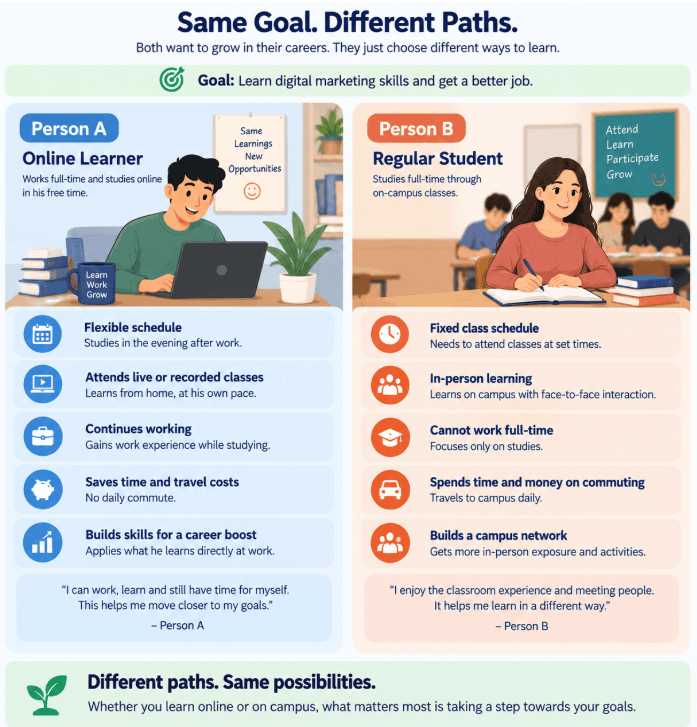
Both online and traditional education can work well depending on a student's commitment and study requirements. The better choice depends on your schedule, learning style, and the type of course you want to study.
Factor | Online Education | Traditional Education |
Flexibility | High | Usually lower |
Location | Study from anywhere | Study on campus |
Interaction | Mostly online | Face-to-face |
Schedule | Often flexible | Usually fixed |
Travel | Usually not needed | Usually required |
Self-discipline | More self-management | More guidance and structure |
Practical learning | Depends on the course | Usually easier for practical work |
Networking | Mostly online | More in-person opportunities |
Which One Should You Choose?
- Choose online education if you want more flexibility or need to study along with work or other responsibilities.
- Traditional education may be a better fit if you prefer face-to-face classes, a fixed schedule, and regular interaction with teachers and classmates.
- The right choice depends on what you want from your education and what works best for you.
Who Benefits Most From Online Education?
Online education can be a good choice if you want more freedom in your studies. It can be very useful if you have work, family, or other responsibilities to manage.
Online Education May Be a Good Fit If You:
- Want to choose your study hours
- Work while studying
- Are comfortable studying on your own
- Have a good internet connection
- Can keep up with classes and deadlines
- Prefer studying from home
- Want to choose courses from universities outside your city without relocating
If most of these points match your needs, online education may be a good fit for you. If you prefer regular classroom interaction and a fixed study schedule, you may find traditional or blended learning more suitable.
How to Overcome the Challenges of Online Education
Online learning can be easier when you have a simple routine. A few small changes can help you stay focused, keep up with your classes, and make the most of your course.
Challenge | Simple Solution |
Trouble having a study routine | Make a weekly study plan |
Distractions | Choose a quiet place to study |
Feeling less connected | Join live classes and student groups |
Too much screen time | Take regular breaks |
Internet problems | Keep a backup internet option |
Less practical learning | Look for courses with practical or blended learning |
Losing motivation | Set small goals for each week |
How to Choose a Good Online Education Program
Choosing an online program is an important decision. You want a course that fits your goals, budget, and study style. Before you enrol, take some time to check these points:
- University recognition - Check if the university and program have the required recognition like UGC entitlement.
- Course curriculum - Look at the subjects you will study.
- Faculty - Check who will teach you and their experience.
- Live or recorded classes - See how the classes are conducted.
- Exams and assessments - Check how you will be evaluated.
- Student support - Find out how you can get help when you need it.
- Projects and practical learning - Check if the course includes projects or practical work.
- Technology requirements - Make sure you have the device and internet needed for the course.
- Total cost - Check the complete fee before you enrol.
- Career support - If career or placement support is offered, check what it includes.
Take some time to compare a few programs before making your choice. A good program should match your needs, fit your schedule, and support your career goals.
Is Online Education Worth It in 2026?
Online education can be a good choice if you want more freedom in your studies. It can also work well if you are working or have other responsibilities.
Online Education May Be Worth It If:
- You want flexible study hours
- You are working while studying
- You are comfortable studying on your own
- The program has a good course structure
- You have a good internet connection and the right device
Traditional or Blended Learning May Be Better If:
- You prefer regular face-to-face classes
- Your course needs a lot of practical work
- You need regular support from teachers
- You learn better with a fixed class routine
- You want more campus activities and in-person interaction
There is no single right choice for everyone. Think about your schedule, learning style, and the course you want to study before making your decision
For example: Imagine you are working full-time and want to earn an MBA. Attending a regular college may mean leaving your job or following a fixed class schedule. An online program can give you the option to continue working while studying. |
Final Thoughts
Online education can be a good choice if you want flexibility and the freedom to study from anywhere. It can be especially helpful if you are working or have other responsibilities.
At the same time, the right choice depends on your course, learning style, and what you need from your education.
Keep these points in mind before choosing online education:
- Choose online learning if you want a flexible study schedule.
- It can be a good option if you want to work while studying.
- Recorded classes can help you learn at your own pace.
- Check the university recognition, course, fees, and student support before enrolling.
- Make sure the course gives you the practical learning you need.
- If you prefer regular classroom learning, traditional or blended education may suit you better.
- Most importantly, choose the learning format that fits your goals, schedule, and needs.
Are you interested in online learning and want to explore online study options? Talk to a counsellor today for personalized guidance on courses and career options.